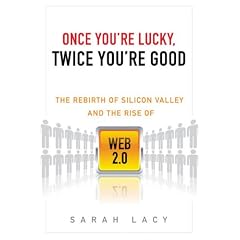

Sarah clearly has a fantastic 'friend list', and has spent a lot of time in the company of leading web industry figures like PayPal and Slide founder Max Levchin, Digg's Kevin Rose and Mark Zuckerberg of Facebook fame. This isn't a book about technology, nor a dry book of business theory, rather it uses human stories and anecdotes to deliver insights into the Silicon Valley scene of startups, web business models and the the venture capital industry.
A few of the things that stood out for me:
- The book is a powerful argument for the benefits of economic clustering. These guys all know each other, invest in each other's companies and feed off each other's ideas. That's one of the main reasons these businesses emerge from Palo Alto and not Peterborough.
- The founders are incredibly driven individuals, working obsessively in pursuit of their dreams. I don't think this is just a US thing, but I do think it explains why people working 9-5 for a modest paycheque from MegaCorps Inc. do not come up with 'the Facebook of [insert chosen market here]'. The title of the book refers to the belief that to really prove yourself in the Valley you have to build not one but two $1Bn companies.
- I hadn't really appreciated just how much open source technologies have transformed the economics of web startups. Making money is still hard, of course, but the barriers to entry have been lowered dramatically, and many web 2.0 firms have built profitable businesses before needing any cash from venture capitalists. It makes me wonder yet again why my previous employer insisted on building everything using expensive heavy metal.
I'm now waiting for someone to write a book about twitter using paragraphs of no more than 140 characters apiece.
Buy from amazon.com
Buy the UK edition from amazon.co.uk


 Posts
Posts


No comments:
Post a Comment